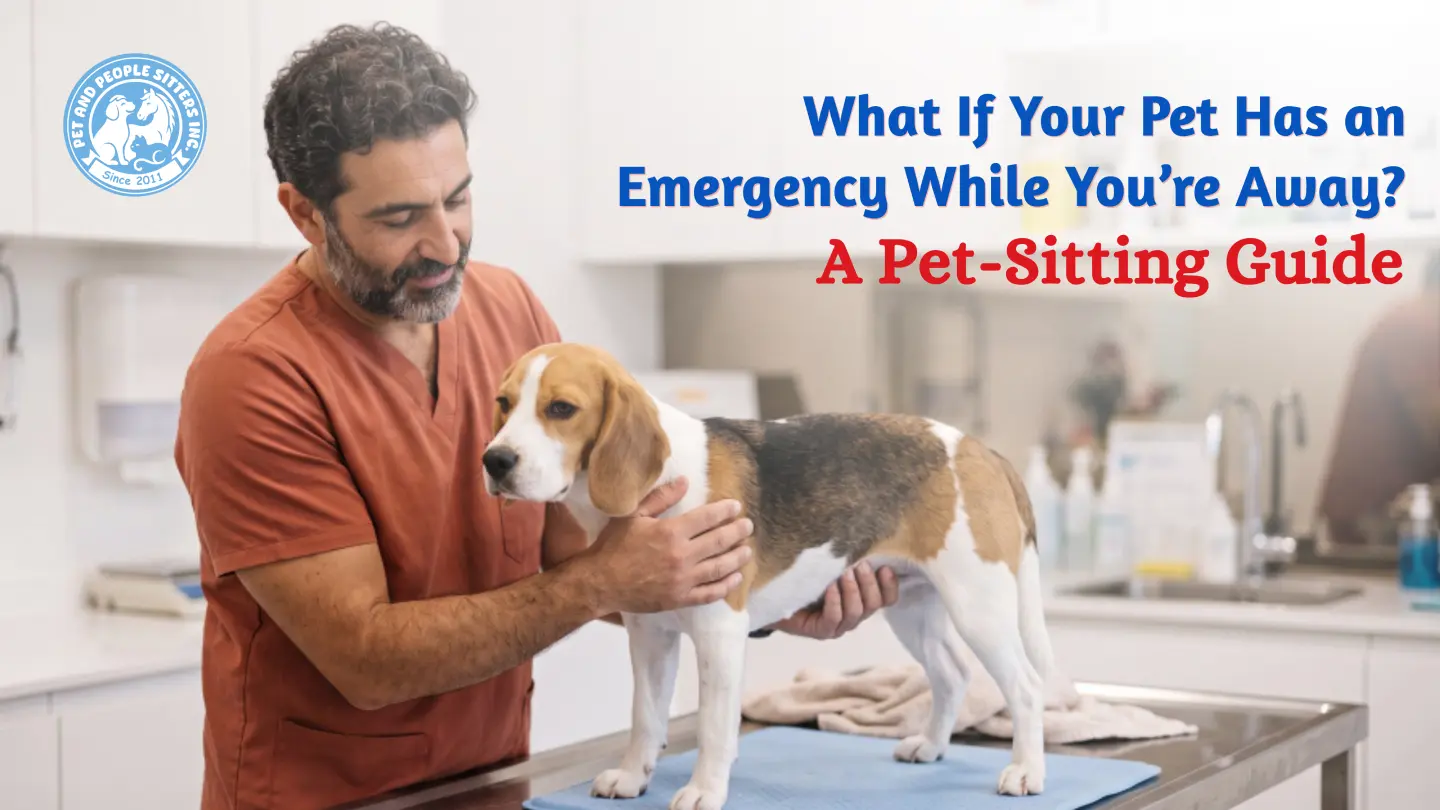
Leaving your pet with a sitter usually means you have already taken care of the basics: food is stocked, medications are labeled, and their daily routine is written down. But what if your pet suddenly starts vomiting, struggles to breathe, or gets injured while you’re hundreds of miles away?
Your sitter may be the first person to notice that something is wrong. So if you’re hiring pet sitting services in Denver, they should know who to call, which veterinarian or emergency vet to contact, and what to do if they cannot reach you. Having a clear plan in place before your trip can prevent confusion when every minute matters.
This guide explains what a pet sitter should do during an emergency, when your pet may need immediate veterinary care, and how to prepare before you leave.
An emergency is not the time to search for your veterinarian’s phone number or figure out where the pet carrier is. Your sitter should have the information they need in one place. So before you leave, make sure that your sitter has the following information.
Give your sitter your primary contact information and a second person they can reach if you are unavailable. Include:
If you are traveling internationally or somewhere with unreliable phone service, tell your sitter that in advance.
Your sitter should not have to search for your veterinarian’s contact details during an emergency.
Leave your regular veterinarian’s name and phone number with your sitter. You should also tell which emergency veterinary facility you prefer. Don’t assume your sitter will automatically know where to go. Write down:
It is also a good idea to contact your veterinary practice before your trip if someone else may need to bring your pet in for treatment.
Medication instructions should be clear. You should provide the medication name, dosage, timing, and any instructions your veterinarian has given you.
The same applies to food and daily care. Include your pet’s normal routine so that a sitter can quickly tell when something has changed.
For example, if your dog normally eats breakfast immediately but suddenly refuses food and seems unusually tired, that change may be important for the sitter to know about.
Ask your veterinarian and pet-sitting provider what authorization is needed if your pet requires treatment while you are unavailable. Your sitter should know:
The exact details may vary, so confirm them with your vet or pet sitter before your trip.
Your first-choice sitter may become unavailable. Your phone may stop working. Your flight may be delayed. Good pet care services in Denver will be able to plan accounts for those possibilities. Ask:
The goal is simple: there should always be a clear next step.
When an emergency happens, the sitter’s first responsibility is your pet’s immediate safety. From there, the response usually comes down to five steps: assess the situation, contact a veterinary professional when needed, communicate with the owner, arrange transportation, and document what happened.
Let’s break down these five steps and go over each of them one by one:
The sitter should first make sure the pet is in a safe environment and look for obvious signs of distress. A pet that is injured, frightened, or in severe pain may react differently than usual.
Some situations are clearly urgent, such as difficulty breathing, collapse, severe bleeding, or a serious injury. Other situations may be less obvious.
For example, if your dog suddenly starts vomiting or seems very weak, the sitter should contact a veterinarian for guidance rather than trying to diagnose the problem.
That does not automatically mean the dog needs an emergency hospital, but it is a significant change that the sitter should report and discuss with a veterinarian or the owner.
If the pet has a serious injury, difficulty breathing, collapses, has a seizure, is bleeding heavily, or may have been poisoned, veterinary attention should not be delayed while waiting for the owner to respond.
In a potentially life-threatening emergency, the sitter should contact a veterinarian or an emergency veterinary hospital.
Once immediate veterinary care is being arranged, the sitter should contact you or the emergency contact listed in the pet’s care plan. An emergency update should answer a few simple questions:
That gives the owner the information they need without creating unnecessary confusion. In a stressful situation, clear information is more helpful than a long message.
If veterinary care is needed, the sitter may need to transport the pet to the clinic or emergency hospital. This is something to discuss before the trip. Before your trip, make sure the sitter knows:
A few minutes of preparation before a trip can eliminate a lot of uncertainty during an emergency.
Once the immediate situation is under control, the sitter should keep a record of what happened. The sitter can note:
This information can be shared with the owner and, when appropriate, the pet’s regular veterinarian.
Not every change in your pet’s behavior requires an emergency veterinary visit. However, some signs should be treated seriously. Like:
The response depends on the situation. If the sitter is unsure whether it is an emergency, they should contact a veterinarian instead of trying to diagnose the problem themselves.
If your pet sitter cannot reach you during an emergency, they should follow the instructions you provided before the trip rather than waiting indefinitely for a response. For a serious or potentially life-threatening situation, necessary veterinary care should not be delayed because the owner is unavailable. Make sure your sitter knows:
Once your pet is receiving appropriate care, the sitter should continue trying to reach you and keep you updated. Having these decisions agreed upon in advance helps your sitter act quickly when you are unavailable.
For many pets, staying in their own home allows them to maintain a familiar routine while their owner is away.
With home pet sitting, a sitter can care for your pet in the environment they already know. This can be especially helpful for pets that become stressed by unfamiliar surroundings or changes in routine.
For many pets, staying at home means they can maintain their normal surroundings and routine while you are away.
Before you leave, walk your sitter through the house and show them exactly where important items are kept. Those few minutes can matter when someone needs to move your pet quickly.
When choosing a pet sitter, don’t only ask about rates and availability. Ask how they handle situations that don’t go according to plan.
The answers can tell you a lot about how prepared a pet-sitting provider is.
You can’t predict whether your pet will have an emergency while you’re away. You can decide how prepared everyone will be if one happens.
Before your trip, take a few minutes to let your sitter know how to contact you, who to call if you cannot respond, which veterinarian to use, where your pet’s medications and supplies are located, and what to do if veterinary care is needed.
For pet owners using pet sitting services in Denver, the right sitter should be prepared for more than the everyday routine. They should know how to respond when something unexpected happens and have a clear process for getting their pet the help they need.
A good emergency plan gives everyone something valuable while you’re away: a clear next step. And if you’re looking for pet sitting in Denver, who can follow through on all your instructions, contact Pet & People Sitters. We can help provide dependable in-home care with your pet’s routine and needs in mind.
Tell the sitter exactly what the condition is, what symptoms they should watch for, what medications your pet takes, and what your veterinarian has instructed you to do. If the condition could become urgent, discuss the appropriate response with your veterinarian before your trip.





Elevating the standard of in-home pet care and estate management in the Denver Metro area since 2011.
© 2026 Pet and People Sitters Inc. All rights reserved.
Powered by Cyber Ace