

If your newly adopted furry friend has spent the past three hours hiding under the couch, refusing to come out and barely looking your way, you may be wondering if something is wrong. Should you leave them alone? Try to comfort them? Give them treats? Or wait it out?
Don’t stress. Your new pet needs some time to adjust to their new surroundings. A new home means new people, sounds, smells, routines, and rules, which can be a lot for a rescued pet to take in at once.
This is where the 3-3-3 Rule can help you understand what your furry friend may need as they slowly settle into their new life.
So, let’s go through this guide and break down the 3-3-3 Rule and see what you can do to help your furry companion feel more comfortable.
The 3-3-3 Rule is a simple guideline that helps new pet owners understand what the adjustment period may look like after adoption. It suggests that a newly adopted pet may need around:
The whole timeline may sound simple, but there is one important thing to remember: the 3-3-3 Rule is not a deadline.
That’s why it’s important to give your newly adopted pet time and space.
Some pets may settle in within a few days; others may need several months before they feel completely comfortable. Their age, personality, past experiences, time spent in shelters, and new surroundings can all make a difference.
The 3-3-3 rule breaks the pet adjustment period into three simple stages:
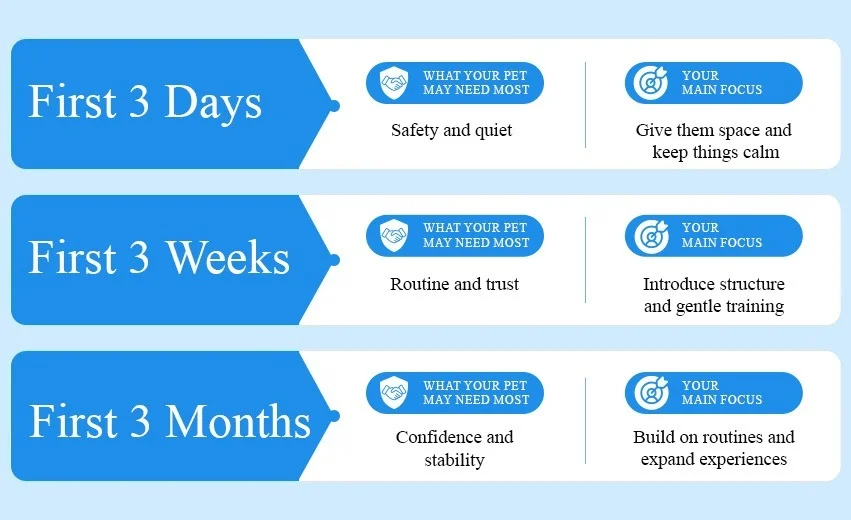
The first few days are really stressful for your pet as they are still trying to figure out where they are, who you are, and whether they are safe.
You may notice these behavior issues:
Some pets may do the opposite and follow you everywhere because being close to someone feels safer. None of these behaviors automatically mean that they don’t like their new home.
Here’s what you can do to help them:
Most importantly, don’t force interactions. If your pet wants to hide, let them. If they approach you, reward that choice with calm attention.
The goal during this phase is not perfect behavior or lots of training. It is helping them feel safe.
After the decompression period, your pet may start to understand how your home works. They may explore more, play with toys, greet you when you come home, or become curious about what’s happening around them.
This is the right time to introduce a simple daily routine and begin gentle training. Focus on:
But don’t try to do everything at once.
For example, if your pet is nervous around strangers, don’t invite ten people over in one afternoon. Give them smaller experiences and allow them to build confidence gradually.
Things that might surprise you:
A pet that was quiet and nervous during the first few days may suddenly become more vocal, playful, or mischievous.
That doesn’t always mean something is wrong. As they become comfortable, they may start showing more of their natural personality. Be patient and consistent as they learn what is expected in their new home.
By this stage, your pet may be much more comfortable with their surroundings and the people around them. Familiar people, sounds, spaces, and routines can begin to feel normal. Daily routines start to feel normal rather than strange.
Maybe they have a favorite sleeping spot. Maybe they get excited when you pick up a particular toy. Maybe they prefer quiet corners instead of busy rooms.
These little details can tell you that they are becoming comfortable enough to develop their own habits.
Your pet may be settling in if they:
Don’t worry if your pet isn’t completely settled after three months. The 3-3-3 Rule is a guideline, not a deadline. Every pet has a different personality, history, and comfort level.
If your pet is not following the 3-3-3 timeline, it is completely normal, and you should not panic.
This 3-3-3 Rule is a general guideline. Many factors can affect their ability to adapt to new environments and people.
For example, a pet that has moved between several homes may need more time than one coming from a stable environment. Another may have a shy personality and take longer to trust new people.
Instead of counting the days, look for small signs of progress. Are they eating better? Sleeping more comfortably? Exploring more of the house? Coming closer to you? Playing more?
These changes matter far more than whether your pet has reached a particular stage on a calendar.
Even when you have the best intentions, some things can make your pet’s transition more difficult.
Your friends and family may be excited to meet your new pet, but they may not be ready for a house full of new faces. Give them time to become comfortable with their immediate surroundings first.
Pets often feel more secure when they know what to expect. Try to keep important parts of their daily routine reasonably consistent.
Some pets become affectionate quickly. Others need more time. Don’t force cuddles, handling, or interaction when they are uncomfortable.
A new home is already a big change. Adding new people, animals, places, and activities all at once can become overwhelming.
If your pet has just arrived, suddenly being left alone for a long period can add to their stress. When possible, help them become comfortable with alone time gradually.
Not exactly. The 3-3-3 Rule is most commonly used for newly adopted pets, especially rescue and shelter ones. However, the basic idea behind it can also be useful when bringing other pets home: give them time, keep things calm, and let them adjust at their own pace.
Cats, rabbits, guinea pigs, and other small pets may have very different needs and adjustment patterns. A cat may spend days hiding, while a rabbit may need a quiet space to feel comfortable before exploring. Their routines, body language, and comfort levels can also vary.
So, don’t treat the 3 days, 3 weeks, and 3 months as a strict timeline for every animal. Instead, use it as a reminder to be patient and watch your pet’s behavior.
Being a new pet owner doesn’t mean your normal life has to stop. You still have work, appointments, errands, and sometimes travel.
The important thing is making sure your pet’s needs don’t disappear when you aren’t home.
Before leaving, think about their food, water, exercise, play, bathroom needs, medication, and comfort. For some pets, staying in their familiar home may also be less stressful than being moved to an unfamiliar place.
If you need help while you’re away for a vacation or business trip, you can call companies offering pet sitting services in Denver to make sure that your pet continues to receive the care and attention they need.
Bringing a new pet home is exciting, but it can also come with a lot of questions. The 3-3-3 Rule gives you a simple way to understand these changes and, most importantly, reminds you to be patient.
Your pet may need three days, three weeks, three months, or even longer. Give them a safe space, a steady routine, and time to build trust. Because sometimes, the biggest sign that you’re doing things right isn’t a perfectly trained pet. It’s seeing the once-nervous animal finally relax, explore, play, and feel at home.
If you need professional pet sitters in Denver who can help keep your pet’s routine and care on track while you’re away from home, feel free to get in touch with Pet and People Sitters.
There is no fixed timeline. Some pets may become comfortable within a few days, while others may need several weeks or months. The best approach is to give them time while keeping their environment calm and predictable.
A newly adopted pet should not be left alone for long periods right away. Start with short periods and gradually increase the time as they become comfortable.
The right amount of alone time depends on your pet. If they become extremely anxious, destructive, vocal, or try to escape, talk to your veterinarian or a qualified behavior professional.
You can introduce a newly adopted pet to daycare or other animals once they are comfortable at home and their health and vaccination needs have been checked. Start slowly in a controlled environment and watch how they respond. If they show fear or stress, give them more time before trying again.
An adopted pet may seem easygoing at first because they are still overwhelmed by their new surroundings. As they become comfortable, they may become more active, vocal, playful, or start testing boundaries. This is often a sign that their personality is coming out, not necessarily that their behavior is getting worse.
Yes, you can leave your new pet with a pet sitter, especially when you need to work or travel. For some pets, staying at home with a familiar routine and caregiver can be less stressful than going somewhere new. Choosing capable pet sitters in Denver who understand your pet's needs and provide clear care instructions is really important.
Contact a veterinarian if your new pet refuses food or water, shows signs of illness or injury, has unusual physical symptoms, or develops sudden or severe behavior changes. Don't assume every concerning symptom is part of the normal adjustment period. When in doubt, getting professional advice is the safer choice.
Michele Kell is the founder of Pet and People Sitters, a Denver-based professional pet sitting and ranch management service serving clients throughout the Denver metro area. With years of hands-on experience, she and her team of professional sitters focus on creating safe, low-stress environments that help animals feel comfortable while their owners are away.





Elevating the standard of in-home pet care and estate management in the Denver Metro area since 2011.
© 2026 Pet and People Sitters Inc. All rights reserved.
Powered by Cyber Ace