
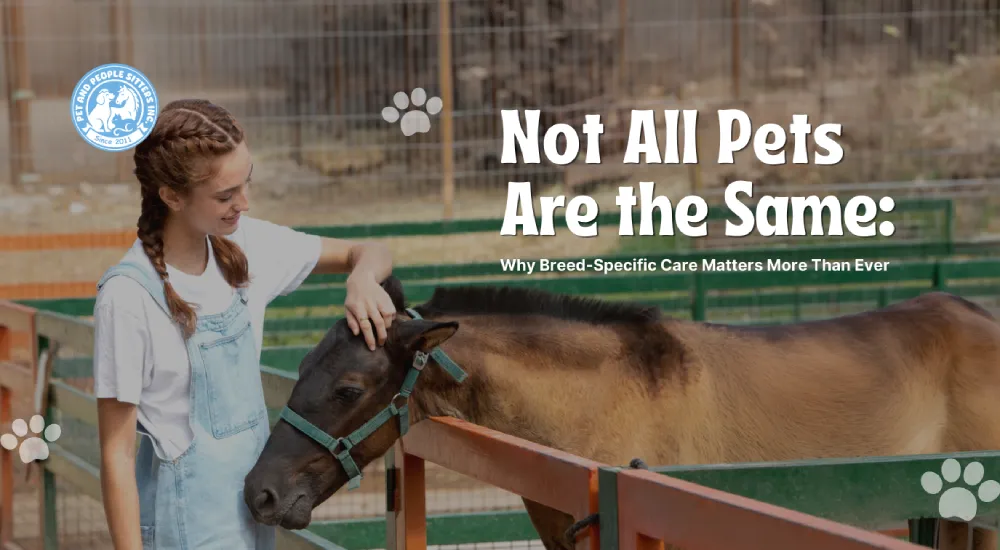
You’ve probably heard the phrase “every dog has its day” more times than you can count. But here’s a version of that idea most people don’t think about until something goes wrong: every dog also has its own set of needs and a skilled pet sitter in Denver understands that deeply. So does every cat, every rabbit, every senior beagle with a heart condition, and every high-drive Border Collie who has decided that apartment living is simply not going to work for her today.
The pet care industry, broadly speaking, is still catching up to this reality. Many pet-sitting arrangements, boarding facilities, and even some professional services operate on a general playbook. Feed the animal, walk the animal if it’s a dog, and make sure nothing gets chewed that shouldn’t. That approach works fine for some pets and fails quietly for others. The ones it fails don’t always make it obvious. They just come home a little off, a little anxious, or a little more withdrawn than usual.
Breed-specific care is the idea that understanding an animal’s genetic background, its historical purpose, its physical build, and its behavioral tendencies should inform how you care for it on a daily basis. Not just how you train it. Not just what vet you take it to. How you structure its day, how much activity it needs, what kind of social interaction works for it, and what kind of environment makes it feel safe.
For pet owners in Denver, this matters more than it might in other cities. Denver’s climate is demanding. The altitude is real. The lifestyle here is active and outdoor-oriented, shaping what people expect from their pets and, in turn, what their pets expect from them. Getting breed-specific care right in this city is not a luxury. It’s part of responsible ownership.
Think about two dogs: a French Bulldog and a Siberian Husky. Both are dogs. Both need food, water, exercise, and companionship. On paper, a standard care checklist applies equally to both.
In practice, those two animals are about as different as two pets can be. The French Bulldog, a brachycephalic breed, has a compressed airway, making overheating a genuine medical risk. At Denver’s elevation, even moderate exercise in warm weather can put a flat-faced dog in real danger. The last thing that the dog needs is a long afternoon walk in July. What it needs is careful monitoring, a cool indoor environment, and someone who knows to watch for labored breathing rather than assuming everything is fine.
The Husky, on the other hand, was bred to run. Not jog. Run for hours, across snow. A Husky that gets a 30-minute walk and then sits in an apartment all day is not a tired dog. It is a frustrated dog. That frustration shows up as destructive behavior, excessive vocalization, and anxiety that makes the dog harder to manage in every situation.
Standard care fails both of these animals in different ways. The Bulldog gets over-exercised. The Husky gets under-stimulated. Neither outcome is the sitter’s fault if the sitter was never given or never sought out the information to know better. That’s the gap breed-specific care is meant to close.
The sitter who understands your dog’s breed is already 10 steps ahead of the one who is just following a generic routine.
Denver sits at 5,280 feet above sea level. Most people know this. What few people think about is how that elevation interacts with an animal’s physiology, particularly during exertion.
Dogs and cats that are new to Denver sometimes take weeks to fully adjust to the altitude. During that adjustment period, they tire more quickly, drink more water, and can be more vulnerable to dehydration than their owners expect. For breeds already prone to respiratory issues, the high altitude genuinely compounds those challenges.
Then there’s the weather. Denver’s winters are cold and can arrive suddenly. Snow on the ground means paw care matters, and different breeds tolerate that cold very differently. A Malamute or a St. Bernard is built for exactly this kind of weather. A Chihuahua or a Greyhound is not. Greyhounds in particular have almost no body fat and an extremely fine coat. They get cold fast and feel it acutely. Sending a Greyhound outside in Denver for a standard 45-minute walk in February, without a coat and without monitoring for signs of cold stress, is a mistake.
Summer brings its own complications. Denver gets more than 300 days of sunshine a year, and summer temperatures can climb into the 90s while the pavement absorbs heat well beyond that. Brachycephalic breeds, senior dogs, and darker-coated animals need adjusted schedules during the summer months. Early morning and evening walks replace midday ones. Shade and hydration become non-negotiable.
A pet sitter in Denver who understands breed-specific care automatically adjusts for all of this. One who doesn’t may simply follow the schedule they were given and not realize the dog has been struggling.
This is not about having a veterinary degree. It’s about building knowledge and staying curious. Here’s how it shows up in practice for some of the most common breeds that pet owners in Denver have.
These dogs were bred for a job. Herding, sled-pulling, livestock management. Their brains need as much work as their bodies. A 60-minute walk helps, but it does not replace the mental stimulation these breeds require. Good breed-aware care for a working dog includes structured play, training reinforcement, puzzle feeders, and activities that give the dog a task to complete. Without that, the energy redirects. Usually, somewhere the owner does not want it to go.
Flat-faced breeds need a sitter who watches the signs before they become symptoms. In Denver’s summer heat, these dogs can go from comfortable to distressed faster than most people expect. Shortened walks, more frequent water access, air-conditioned rest periods, and careful observation are the standard here, not extras. Some of these dogs also have soft palate issues that affect their breathing during sleep. A sitter who knows the breed knows not to be alarmed by the snoring, but also knows when the breathing sounds different in a way that warrants a call.
Senior pets deserve their own category because age changes the equation regardless of breed. Small dogs are generally considered seniors around age 7. Large breeds can reach senior status as early as 5 or 6 years old. A senior Lab moves differently from a young one. A 12-year-old cat may be more sensitive to temperature changes, more particular about its litter box, and more stressed by disruptions to routine than a younger cat would be. Breed-aware senior care means adjusting activity levels thoughtfully, watching for signs of arthritis or cognitive changes, and being consistent with the routines the animal depends on.
Rescue animals, regardless of breed, often carry behavioral histories that aren’t fully known. But breed tendencies still inform how anxiety shows up. A rescue Greyhound from a racing background is anxious in ways that are different from a rescue Pit Bull that was never socialized. Understanding the breed gives a caregiver context for the behavior and a better framework for helping the animal feel safe.
The question worth asking any pet sitter or pet care service you’re considering is simple: What do you know about my specific animal? Not just its name and feeding schedule. What do you know about what makes this breed tick, what stresses it out, what it needs to feel genuinely settled when I’m not home?
The answer tells you a lot. A sitter who asks follow-up questions about your dog’s breed, temperament, health history, and typical daily rhythm before the first visit is signaling something important. They understand that care is not one-size-fits-all. A sitter who shows up and gets right to the checklist without asking much is telling you something, too.
At Pet and People Sitters, we start every client relationship with a meet-and-greet consultation for exactly this reason. Before any care begins, we sit down with you, meet your animal in its own home environment, and build a care plan that reflects your pet’s individual needs. Not a template. An actual plan, shaped by who your animal is.
We’ve been doing this in Denver since 2011. In that time, we’ve cared for animals of every shape, size, age, and temperament across this city. We’ve learned that a Golden Retriever’s needs are not the same as a Chow Chow’s, that a senior Persian cat requires a completely different approach than a young Siamese, and that the dog who looks calm on the surface sometimes needs the most careful handling of all.
Our sitters carry that understanding into every visit. It’s part of how we were trained, and it’s part of what we expect from every member of the team we bring on.
Most of the conversation around breed-specific care centers on dogs. Cats get lumped together as independent, low-maintenance creatures who basically manage themselves. That framing is convenient and mostly inaccurate.
Maine Coons are large, social, and vocal. They want interaction. Leaving a Maine Coon alone for extended periods without stimulation or companionship tends to produce a stressed cat, not a calm one. Bengals are intensely active and intelligent. They are also prone to getting into things, climbing places they shouldn’t, and finding creative ways to entertain themselves that their owners often do not appreciate. A sitter who checks in, refreshes the food and water, and leaves in 15 minutes is not meeting the needs of either breed.
Persians and Scottish Folds have physical characteristics that require specific daily attention. The Persian’s flat face means tear staining is common, and the eyes need to be wiped regularly. The Scottish Fold’s folded ear cartilage requires careful cleaning to prevent buildup and infection. These are not complicated tasks, but they are tasks a sitter needs to know about and actually do.
Knowing the cat’s breed matters. So does knowing its individual personality, its preferred hiding spots, its reaction to strangers, and whether it’s the type to greet someone at the door or disappear under the bed for 20 minutes before coming out. Good cat care starts with that knowledge.
Breed-specific care works best when you, as the owner, contribute to it. Even the most experienced sitter benefits from your firsthand knowledge of your animal. Before you leave for a trip, here is what makes the biggest difference:
The more specific you can be, the better care your pet receives. A sitter who already brings breed knowledge to the table and is given accurate individual information about your animal is in the best possible position to keep that animal genuinely happy while you are away.
Breed-specific care is not a niche concept for competitive dog owners or overinvested cat people. It is simply the recognition that animals have genuine individual needs, that those needs are partly shaped by genetics and history, and that caring for an animal well means understanding those needs.
In Denver, where the climate is variable and the lifestyle is active, this understanding matters in concrete ways. The pet sitter who knows that your Husky needs a long run rather than a short walk, that your French Bulldog should not be outside during the hottest part of a July afternoon, and that your senior Beagle’s slower pace is not laziness but a physical reality, is giving your animal something most generic care arrangements simply cannot.
That’s what pet care services in Denver should look like. Not a checklist applied uniformly to every animal that walks through the door, but thoughtful, informed attention to who your pet actually is.
If you’re looking for a pet sitter in Denver, CO who brings that level of care to every visit, we’d love to talk. Reach out to Pet and People Sitters to schedule a meet-and-greet consultation. Your animal deserves someone who shows up knowing more than just its name.


Elevating the standard of in-home pet care and estate management in the Denver Metro area since 2011.
© 2026 Pet and People Sitters. All rights reserved.
Powered by Cyber Ace